HOW RUSH REALLY FEELS ABOUT SANDRA FLUKE

Tuesday, May 30, 2006

Cardiologists Lose License, should be in Prison

This story is from the Redding, CA Record Searchlight

by Ryan Sabalow

After almost four years of investigation, the state medical board moved Tuesday to revoke or suspend the license of a Redding doctor accused of having performed hundreds of unnecessary heart procedures.

In an accusation filed with California Attorney General Bill Lockyer, Dr. Fidel Realyvasquez Jr. is charged by the Medical Board of California with gross negligence stemming from bypass surgeries he performed on three patients in 2001 and 2002.

According to the accusation, Realyvasquez, the chief cardiac surgeon at what was then Redding Medical Center, operated on the patients -- ages 58, 52 and 76 -- without cause, based solely on diagnoses made by cardiology chief Dr. Chae Hyun Moon.

Moon, who also is under investigation by the state medical board, voluntarily agreed to stop practicing medicine in July 2003.

Moon, 58, is charged by the medical board with dozens of counts of gross negligence, incompetence, dishonesty and corruption, filing false or fraudulent claims, failure to maintain adequate records, and repeated negligent acts.

That investigation is ongoing.

Tuesday's accusation is that Realyvasquez, 57, performed the three coronary bypasses without verifying Moon's diagnoses.

The medical board's accusation reports each of the three surgeries in detail, using words like "failed to," "unnecessary" and "erroneous" to describe Moon's diagnoses and the following surgeries by Realyvasquez.

The accusations identified the patients by initials to protect their privacy.

In the case of the of the 58-year-old patient, identified as "E.G.," Realyvasquez performed a triple bypass coronary graft without checking to see that the patient could have been helped by a less invasive procedure, according to the filing.

In the second case, Moon told a 52-year-old woman in March 2002 she needed a coronary artery bypass graft surgery, the filing says. Moon suggested that if she didn't get one, "her grandchildren might find her dead," according to the accusation.

The accusation calls Moon's diagnosis of heart angiography a "misinterpretation" and says the patient had only "minor, if any, coronary artery disease."

In his examination of the patient, "Dr. Realyvasquez simply restated Dr. Moon's findings ... and obtained the patient's consent for the surgery," according the accusation.

The most serious allegation stems from the 76-year-old woman's surgery.

The accusation says she "suffered a major embolic stroke, from which she has not yet fully recovered" because of a four-vessel bypass Realyvasquez performed based on Moon's diagnosis.

Realyvasquez's Sacramento attorney, Malcolm Segal, said the medical board's claims are unfounded because his client simply was going off of test results given to him by another physician -- something every surgeon does.

"What (the accusation) seems to be saying is that no physician can rely upon any test report prepared by another physician on the case," Segal said. "I question then, does that mean that a surgeon has to repeat and personally do all the blood tests, repeat and personally do all the X-rays, repeat and redo every other test, even when, by training, that's not his responsibility?"

Saying that he had not seen the medical board's accusations, Moon's attorney, Matthew Jacobs of Sacramento, declined to comment on the allegations against Realyvasquez or Segal's statements.

Redding attorney Russell Reiner, who represents 345 patients who sued the doctors in civil court, said the final decision lies with the person holding the scalpel.

"It's the surgeon's ultimate responsibility to determine whether a person proceeds to surgery," Reiner said. "Realyvasquez failed in his responsibility."

Reiner said the medical board's accusation is "long overdue."

The complaint urges that Realyvasquez's license be revoked or suspended, and that he be forced to pay the costs of the investigation, future enforcement and probation.

Tuesday's filing is the latest chapter of the Redding Medical Center saga, which began in October 2002, when federal agents raided the hospital after tips from whistle-blowers.

Federal officials have been hashing out a settlement in that case since Nov. 15, when Moon and Realyvasquez came to a "global settlement" and agreed to pay prosecutors $1.4 million each.

A spokeswoman for the U.S. attorney's office in Sacramento said prosecutors have until June 2 to finalize that deal.

The settlement ended three years of criminal investigation.

No criminal charges were filed, and none of the doctors has admitted guilt.

In February, Realyvasquez and two other surgeons, Kent Brusett and Ricardo Javier Moreno-Cabral, were ordered to begin paying a $21 million civil settlement to 760 patients.

Moon and other cardiologists settled separate civil suits for $24 million nearly a year earlier.

Both doctors still live in Redding, their attorneys said.

Segal said his client has been "working on other matters related to medicine, including research."

Reporter Ryan Sabalow can be reached at 225-8344 or at rsabalow@redding.com.


Thursday, May 25, 2006

CABG - Legal Assault with a Deadly Weapon.

If a patient is told by a cardiologist that his or her heart is in "GREAT SHAPE," but he or she needs a CABG or he could drop dead at any time, and the doctor hands the patient a pen with which to sign the permission to perform the surgery, he should be arrested and charged with conspiracy to commit assault. If this patient, with the heart in "GREAT SHAPE," indeed has the surgery, the cardio-thoracic surgeon and all of his assistants, including the cardiologist who referred the patient should be arrested for assault with a deadly weapon. And if, this patient whose heart was in "GREAT SHAPE" before the surgery happens to die on the table or of later complications, that entire group of conspirators should be charged with murder.

Two years ago, after seeking a second opinion from a noninvasive cardiologist, I opted for treatment with medication for my unstable angina instead of a quintuple bypass. Ten days ago, my friend underwent a triple CABG and he is miserable. He is afraid to go to sleep at night for fear that he won't wake up. He is not allowed to lift anything heavier than his shoes for several months. He can't walk more than 1/2 hour a day for 3 months. He feels like his guts are going to fall out.

Granted, a year from today, if he is lucky, he'll say to me, "I feel great, I am so glad I had that surgery last May." But I am equally convinced I'll be able to say, "I've felt great for three years and didn't have the CABG." He may then say, but you must take all kinds of medicine every day for the rest of your life." And my response shall be, "Well, don't you as well."

Before you let a cardiologist talk you into this major surgery that you probably don't need, please, get a second opinion from a noninvasive cardiologist. If your current heart doctor says, "Oh, you are a walking time bomb, you haven't time for that," or "Dr. Cutter is a cardio-thoracic surgeon, he's your second opinion," RUN, don't walk to a noninvasive cardiologist because chances are those other two guys are lying to you.

Wednesday, May 17, 2006

Some Disturbing Facts

The fact that most patients with Coronary Artery Disease (CAD) can be safely and medically treated instead of with invasive and surgical solutions such as angioplasty and Coronary Bypass Arterial Grafts (CABG) has been known for over ten years. C. Pepini, writing in the Journal of Myocardial Ischemia in 1995 said this in his paper titled "Management of Myocardial Ischemia: A Time to Re-evaluate." In 1997, in their paper Evidence-Based Coronary Care," in a 1997 Annals of Internal Medicine , Braunwald and Antman reaffirmed Pepini's findings.

My own noninvasive cardiologist, Howard Wayne, MD (www.heartprotect.com) says in more than 22 years of treating his CAD patients with medication, only 11 of them had to have a CABG because they stopped responding to his medical regimen. During the same period, mortality in his patients from CAD and incidences of heart attacks has been less than one percent a year.

Finally, Dr. Thomas Preston, MD, a Professor of Medicine at the University of Washington School of Medicine and Chief of Cardiology at Pacific Medical Center in Seattle, said, "CABG is overused, frequently ineffective, and absurdly expensive. It is the epitome of modern medical technology, yet, as it is now practiced, its net effect on the nation's health is probably negative." Strong words from a cardiologist, but no stronger than those Howard Wayne has been saying for years.

In his editorial, "Marketing an Operation," Preston states the following:
  • CABG consumes more medical money than any other treatment of procedure.
  • Although performed less frequently than most common abdominal and gynecological operations, it is the leader in terms of equipment and personnel, hospital space, and assorted resources.
  • CABG does not cure CAD, is scandalously overused, and its high costs drains resources from other areas of need.
  • Fully half (Wayne says 95%) of the CABGs done in the United States are unnecessary surgeries that do not save lives or even prevent heart attacks.
  • Among sufferers of CAD, those treated without surgery enjoy the same survival rate as those who do.

These are the words of a respected Professor of Medicine and a chief of Cardiology for a major medical center. They are the words of a noted noninvasive cardiologist who has been treating CAD patients primarily with medication for over 22 years. There has been reams of papers published in medical journals for more than a decade that expose the Coronary Artery Bypass Graft as unnecessary, expensive and dangerous. They stop your heart when they perform this surgery for crying out loud. Listen to the wisdom of a few upstanding cardiologists who are desperately trying to stop the gross over-prescribing of CABGs.

Why do cardiologists insist on performing this surgery instead of treating their CAD patients? There can only be two answers to this question. They either do not know any better or it is a matter of they put their own financial well-being ahead of the health of their patients.

This message is being sent out in emails and placed on message boards and forums around the Internet. Administrators of these sights have a choice. They can continue deleting these posts and demonstrate they are part of the problem, or they can prominently display and promote this discussion. Let's see what side of the issue they are really on.

Thursday, May 11, 2006

It is high time for an update

Hey, Dr. Corey, I'm still alive and kicking. In fact, two years after refusing to have my chest cracked open by a cardio-thoracic surgeon at Indiana Heart Hospital, I am feeling better than ever! This despite the scare tactics you and he used to try to get me on the operating room table. It turns out I was not the walking time bomb you said I was.

In fact, I am alive and well, working on an offshore drilling rig in Nigeria, West Africa. I am sitting on that rig this very moment, typing this post to the blog that I have not posted on in nearly a year. I just got off the phone with my lovely wife, Rebecca (YES! I've gotten married since my last post! -- and she's 16 years younger than I) and she gave me the sad news that a friend of ours is trying to be talked into a triple cardiac artery bypass graft.

It seems our friend has symptoms that are similar to mine and a story that practically mirrors mine. He has angina. His doctors tell him that his coronary arteries are badly blocked -- but his heart is in good shape. Well people!! If the heart is in great shape, it must be getting oxygen, that's what keeps the heart in great shape! If the oxygen isn't getting through the clogged coronary arteries, it must be bypassing them in some way, right?

The body is a miraculous entity. It has the capability to heal itself. When arteries get blocked, the ingenious body builds natural bypasses to replace the clogged ones. There is a doctor in San Diego named Howard Wayne. He taught me this fact and has been treating me for two years with medication. MEDICATION!!! Not surgery. I didn't get cut open. I didn't have my heart stopped, I didn't have a long post-op recovery period and an even longer period of physical therapy AND, I didn't put a lot of money in my surgeon's pocket!

Dr. Wayne is a board certified cardiologist, among other certifications he can boast. He is not a quack. He costs about 10 percent what bypass surgery charges insurance companies. He is not trying to pay for his Mercedes Benz 500 or the new olympic swimming pool in his backyard. He is trying to show the 80,000 Americans doctors scare into bypass surgery every year that for most of them, not only is the surgery unnecessary, it reduces your life expectancy! You could do nothing at allfor your angina and still live longer than many bypass victims.

Yes, I wrote "VICTIMS." Most patients who undergo bypass surgery are victims of scare tactics made by cardiologists who either do not know what they are talking about, or worse, are purposely misleading their patients to get them to have unnecessary but very expensive surgery.

I am going to call my friend this afternoon at 3 pm Nigeria time (10 am Indianapolis time) and ask him to please read my blog. I'll ask him to go to the archives and start at the beginning. I also want to encourage him to call Dr. Wayne in San Diego. I have an appointment on June 6 to see him for my second annual check up.

Wake up America! Your cardiologist is more interested in his financial well being than your health.

Wednesday, September 07, 2005

So Long Gilligan

Bob Denver died this week. The 70-year old comedic actor was best known for his portrayal of Gilligan of Gilligan's Island. He succumbed to complications from a coronary artery bypass surgeons convinced him he needed. One has to wonder if, like Bill Clinton, he did not receieve a second opinion from a noninvasive cardiologist. You only hear about the failures of bypass surgery when someone famous passes that has undergone one. But there are thousands of bypasses performed unnecessarily year after year to keep big hospital corporations solvent and highly paid surgeons able to buy a brand new Mercedes Benz every year.

It has been nearly two years since my cardiologist attempted to coerce me into getting a quintuple coronary artery bypass. I began being treated with medication on June 6, 2004 and I feel great. And I don't have a nasty scar on my chest where the surgeons cracked it open. Already I have lived longer than the doctors at the Indiana Heart Hospital thought I would and I am going strong.

I have been working as a safety advisor on an offshore drilling rig in Nigeria, West Africa since April. I feel strong and vital and my stamina is that of a man ten years younger than I am. If I had the surgery, chances are I would still be experiencing post operative pains and complications and wouldn't feel half as good as I do now.

In November, Rebecca and I are going on a five night vacation to the City of Lights, Paris, France. I fully intend to take advantage of the romantic atmosphere and environment and enjoy myself with the woman I love.

If doctors tell you or a friend you need a bypass, politely tell them you want to obtain a second opinion froma noninvasive cardiologist. Try medication before getting your chest cracked open unnecessarily.

Friday, June 03, 2005

I Am Getting Better!!

Rebecca and I journeyed to San Diego on May 28 and returned on June 1. It was my annual pilgrimage to Dr. Howard Wayne's Noninvasive Heart Clinic. My appointment was on May 31 and we enjoyed and appreciated the hospitality and fellowship of friends who live in that beautiful city. In fact, they kindly loaned us a car while we were there.

Enough about the non-medical stuff -- Let's get to the reason for this post:

I have spent the past year taking medication twice a day for a problem cardiologists in Indiana insisted must be corrected with a Quintuple Coronary Artery Bypass Graft. I was warned that unless I had the surgery immediately, I faced the probability of having a heart attack within three months or less.

Well, I am still standing! I fact, according to Dr. Wayne, my heart is in better shape today than it was when he saw me exactly a year ago. The walls of my left atriumthat were slightly enlarged have decreased in size. My ejection fraction has gone from 65 to 72.

And I haven't experienced angina symptoms since I began his regimen, so he has removed Unstable Angina from my list of diagnoses.

But by far the best news I have to report, is I started working again. That's right, after almost two years on Social Security Disability, I felt good enough to work and was offered employment.

I began working as a Safety Advisor to ExxonMobil on the drilling rig Scarabeo 7, working off the coast of Nigeria, West Africa. I spent 43 days on the rig recently, my first hitch offshore since 1998.

Dr. Wayne was opposed to the job at first, since I would be so isolated from a decent medical facility. But everything went well and he has certified me "fit for duty."

I return to Nigeria on July 4.

Remember: IF YOUR DOCTOR INSISTS YOU NEED CORONARY BYPASS SURGERY -- GET A SECOND OPINION FROM A NONINNTERVENTIONALIST CARDIOLOGIST.

Wednesday, March 23, 2005

California Here I Come

Well, this June will mark a year of treating my coronary artery disease and hypertension with Dr. Wayne's medical regimen. I am so grateful I decided to get a second opinion when in May of 2004, I was told by a cardiologist and cardiothoracic surgeon at Indiana Heart Hospital that I needed an immediate quintuple coronary artery bypass graft (CABG). Instead of getting my chest cracked open and the trauma of dangerous, potentially life-taking major surgery and spending months in rehab trying to recover from unnecessary surgery, I have had a productive, active and satisfactory life.

My blood pressure runs between 88/56 and 100/62 while at rest. Side effects from this lower than normal BP are few and very transient. I have experienced exactly one episode of angina that lasted approximately ten minutes and stopped about five minutes after I began resting during a brisk walk in cold weather. I have had absolutely no shortness of breath or other symptoms since before June 6 2004.

I am returning to San Diego on June 29 for a follow-up appointent with Dr. Wayne. I am looking forward to seeing this man who literally let me live the good life.

Wednesday, February 23, 2005

Life is Beautiful

Well, its only a week until the end of February. It has been a fairly comfortable winter, with only a few snowy days and nights and not all that much cold weather. I am anxiously awaiting the spring though. I look forward to planting some gardens and basically getting outside more than I am now.

I need to get my activity up. My slothfullness of winter has caused me to develop an extra layer of fat, like a bear puts on before going into hibernation. My health is fairly good, although my back and neck are in constant pain, probably from some degenerative joint disease that I've had at least since I retired from the Army in 1988. My heart keeps on ticking and my blood pressure is maintained at an average of around 90/54 by the medications Dr. Wayne put me on last June.

Speaking of Dr. Wayne: In mid June, I shall be journeying back to San Diego on the second of what I hope are decades of annual visits to see the amazing noninterventionalist cardiologist. If you do not know about Dr. Wayne, please go to the first message on gthis blog and read up on what the man has done for me.

Wednesday, February 09, 2005

We're Still Kicking

Belated New Year greetings! I have been so busy writing and enjoying life that I completely failed to post a new years greeting. Well, since the Chinese Lunar New Year just passed, let this one be in honor of that holiday.

I remain healthy, although I did gaain too much weight since the onset of winter. My blood pressure continues to fluctuate between a systolic of 90 - 100 and a diastolic of 48 - 60. I feel good and am completely free of angina.

I managed to sell a piece I wrote about gambling to a local weekly tabloid here in Indianapolis, Nuvo, although I am not sure when it will be published. I also am writing and will offer for sale, an article I recently wrote about psychics. My book, The Ghosts of November, may have a new publisher, I will let you know when and if it happens.

I also will try to be a better poster this year, but wcan make no promises. Well, take care for now and remember -- ALWAYS GET A SECOND OPINION BEFORE YOU LET THEM CRACK YOUR CHEST!

Wednesday, December 15, 2004

Year is almost over

In 15 days we will end 2004 and start a new year. This has been an interesting year for me, one of health problems that required major decisions. I was told in April that I needed a quintuple coronary artery bypass. This information was presented to me in such a way that I was led to believe I would never see 2005 unless I let a cardiothoracic surgeon crack my chest. Well, I opted for a second opinion, decided to be treated with medication rather than surgical intervention and am I ever glad I did.

I began my medical regimen In June. Now, half a year later, I can honestly say I have not had any symptoms I recognized as the angina that caused me to seek medical help in the first place. I take 22 pills a day, including medication for my Parkinson's Disease and I feel wonderful. Rebecca, the lady in my life and I are in the process of writing a book and all is right with the world.

The reason I am posting this message is to urge anyone who has been told he or she requires heart surgery to get at least a second and maybe a third opinion. And have a great Christmas and a prosperous and healthy new year.

Saturday, October 30, 2004

Good Saturday Morning

Good morning from the heartland of America. My blood pressure continues to register around 90/50 almost every day and I am completely without angina pain, shortness of breath or any other symptoms of cardiac problems or hypertension. I continue to take my medication as ordered and feel great. I have lost approximately 15 pounds since the summer and continue to eat right and exercise moderately. Except for some morning bach aches, knee pain and occasional neck pain from arthritis and degenerative joint disease every person my age begins suffering, I am in excellent health. I will post my blood pressure and pulse readings from October 7 in a day or two.

If anyone who comes across this blog has any questions or comments, feel free to make them. Have a safe Halloween and don't forget to vote Tuesday.

Thursday, October 07, 2004

BP Report 9/7/04 thru 10/7/04

(This is a copy of my BP Report sent to Dr. Wayne today.

My BP Report for 9/7/04 thru 10/7/04 follows:

Date Time BP Pulse
9/07 2100 90/47 60
9/08 2045 105/60 62
9/09 2300 80/46 58
9/10 1100 94/48 66
9/11 2000 102/52 66
9/12 2000 94/54 60
9/13 2015 122/70 62
9/14 2100 96/56 64
9/15 2115 96/56 62
9/16 2000 104/56 86
9/17 1900 104/56 70
9/18 2145 96/54 58
9/19 2130 100/56 60
9/20 2100 102/58 74
9/21 2130 90/50 70
9/22 2145 100/54 66
9/23 2045 104/60 56
9/24 2100 106/56 58
9/25 2045 100/56 64
9/26 2000 104/58 70
9/27 2100 100/60 62
9/28 2000 104/56 72
9/29 2030 94/52 62
9/30 2045 112/68 68
10/1 2045 104/56 66
10/2 1900 104/54 70
10/3 1945 104/56 70
10/4 2045 104/58 64
10/5 1945 94/56 60
10/6 2100 104/54 70
10/7 1230 94/50 68

The lightheadedness his been gone for about a week now. I have noticed my BP is slightly higher than it had been running and I have had a couple of minor occassions of a small amount of chest tightness, not associated with exertion. It may be due to the change in the weather, I do not feel bad at all. When my BP was really low and I was getting a lot of lightheadedness, we cut the monpril from 20mg to 10mg. Should I go back up to 20mg and see what happens?

Sunday, October 03, 2004

October Update

Well, at least one reader left a reply to a couple of posts since I began this Blog, so perhaps my story is being read by people who have been told they need coronary bypass surgery and probably really do not. I continue to do well on my medication regimen, however, in the past couple of weeks I have noticed a slight rise in my blood pressure readings throughout the day. Before, I was averaging around 90/50 or slightly lower. Recently, they have been around 100 over 56, not a very perceptible difference, however, I have noticed some occasions of what I would describe as "chest discomfort a couple of times this week. Of course, most chest symptoms people experience are not related to the heart, so I am not really worried about them, especially sense my heart rate continues to be strong and normal.

I also will admit to increased symptoms of arthritic pain, especially in my back and neck, where I have DJD and my knees and shoulder as well. Frankly, I attribute these aches and pains to the changes in the weather the fall brings. This morning, as I type this entry, it is 37 degrees in Brownsburg, Indiana. I already take two aspirin four times a day so I will not take any other pain medication to ease the pain. However, I have become more liberal in the application of analgesic balm. Oh well, I guess I'll send Dr. Wayne an update email tomorrow and see what he says about the blood pressure readings. Until next time,hang in there and enjoy life.

Tuesday, September 21, 2004

Returned to My Indiana Cardiologist

Well, I had an appointment with my cardiologist's Physician Assistant this morning and was she ever surprised. Remember, this is the Indiana cardiologist who thought I needed a bypass operation when he last saw me in May.

Now I have been on my medication regimen since June 6, have lost almost 10 pounds,, feel great and look well, too. She was shocked at my low blood pressure (80/50) and took it twice. She was surprised to find my BP rarely goes above 90/50 any more and that my lightheadedness is pretty much gone. She gave me a cursory physical exam, listened to my lungs, heart and abdomen with her stethoscope, asked several questions and then declared that since Dr. Wayne is going to see me once a year, Dr. Cory can do the same. My next appointment is Sept. 26, 2005.

Saturday, September 18, 2004

Why we are here...

Well, everyone has to be someplace, every minute of the day. Since wordworks2001 was banned from HealthBoards.com for speaking his mind, I decided to move many of my posts from that site to this blog. Unfortunately, I was unable to replicate my original posting to HealthBoard, which was titled "My Experience with Cardiologists." At the time of my banning, the thread which began in May 2004, had more than 3150 views, by far the most hits of any thread on the board. I have decided to move my comments about heart disease, hypertension and the lot to Blogspot, where freedom of speech reigns for all, including anyone who would care to reply or comment.

Although I began this blog today, I have back-dated my blood pressure readings to the dates I emailed the reports to my cardiologist. I think many of you with a traditional view of the treatment of hypertension will be surprised.

Medicate First!!

The American Heart Association and the American College of Cardiologists both state that this condition should be treated with medication FIRST. Why go to the big guns from the get go? I responded very well to meds and my blockages were very very severe (85-100%). And most cardo-thoracic surgeons and invasive cardiologists totally ignore the fact that in people in their 50s, revascularization through angiogenesis picks up the slack left by the coronary vessels that have been compromised. In fact, a CABG usually damages most of the revascularization the body has instituted to heal itself. Why do they do that? Well there's one simple answer, CABGs are much more lucrative than treating this disease with medications.

I have come to believe that if a cardiac physician tells you that you need surgery immediately and you are a walking time bomb waiting to explode or the longer you delay the worse its going to get, you should run, not walk to the nearest board certified noninterventionalist cardiologist and obtain a second opinion. I had been scared into believing the 100% blockages in two of my coronary arteries and 85-90% blockages in the third and other major vessels around my heart meant I would have a heart attack and die at any minute if I didn't have the surgery. Yet, I was told my heart was in good shape. Now what kind of idiot did that interventionalist cardiologist and his cardio-thoracic surgeon buddy think I was? The pipes supplying oxygen to my heart are clogged yet my heart's in good shape? That does not make any sense at all. They didn't tell me about revascularization as the reason my heart was in great shape. Why? because if they did, they knew I would seek another opinion and quite possibly find out my angina was due to hypertension undert physical exertion and they would not get to perform their very expensive lifesaving surgery. As it was, that's exactly what happened. But not because these doctors were ethical and saw that I the patient was fully informed. Oh no, I had to have surgery postponed because the surgeon was not in network with my insurance. Had he been, I would have been one more unnessecary coronary bypass performed in 2004.

Nine Heart Risk Factors

Nine Heart Risk Factors
------------------------------------------------------------------------
A doctor named Salim Yusuf says there are nine risk factors that account for 90% of all heart attacks. And, we can do something about most of them.

The risk factors include:

* Smoking
* Abnormal cholesterol
* Diabetes
* High blood pressure
* Stress
* Abdominal obesity
* Sedentary lifestyle
* Eating too few fruits and vegetables
* Abstaining from alcohol


A report on CBS News.com's WebMD, says the factors are "equal-opportunity killers," all races, sexes and ages of people can fall victim to these same risks. The study included 30,000 people -- half were first heart attack survivors and half were healthy volunteers of similar ages, races and genders of the heart attack victims.

Generally, they found out
* The bigger the waist, the bigger the risk.
* The bigger the cholesterol particles, the bigger the risk.
* Smoking and a bad lipid ratio accounts for 2/3 of heart disease.
* Smoking alone increases heart attack risk 36%.
* Smoking 3 cigarettes a day wipes out the ptotective effect of aspirin.
* Smoking 3 cigarettes a day wipes out 2/3 of the protective effect of cholesterol lowering drugs.
* Stress doubles the risk of a heart attack.
* A good diet (vegetables & fruit), regular exercise and moderate alcohol intake reduce the risk of heart disease.

Of course diabetes and high blood pressure are factors that are harder to control. However, most people can have their hypertension controlled with medication and diabetes can respond well to weight reduction and dietary changes.

Something I cannot emphasize enough is that many people do not know they have hypertension until it is too late, especially if they are relying on a normal BP finding during physical exams or while getting the BP checked at the pharmacy or supermarket. I always had normal, or even low BP until my cardiologist checked it while I was squeezing a grip testing instrument in my extended right hand for about a minute. My BP shot from 120/70 to 140/110!

I had been having chest tightness (unstable angina) on exertion for months. Little did I realize it was caused by my high blood pressure, even when I would walk as little as four blocks, I would get the chest tightness. My cardiologist put me on Meapropolol, Modiuretic and Monopril starting in June. The anginal pain has disappeared and I am able to do all my normal activities, including mowing my very large yard with a walking mower this morning.

So if you are having angina pain and you don't think you have high blood pressure, ask the doctor to take it while you lay on your back, with your right arm extended in the air squeezing a small rubber ball as hard as you can. You may be very surprised!

Coronary Bypass for a 90-year-old Man!!!

!

boltnut55
Junior Member

Join Date: Jun 2002
Posts: 13


Coronary Bypass for 90 Year Old?
------------------------------------------------------------------------
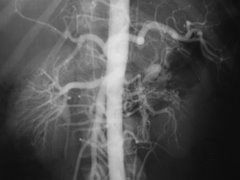
Hi. My father is almost 90 and two weeks ago was diagnosed w/CHF when he ended up in the ER w/breathing problems. Several days later, he was released (W/O proper meds, which we took care of the next day), but yesterday morning, he ended up in the ER again. This time, the drs. found out he had a small heart attack. Drs. did an angiogram today and found that all three arteries were damaged/clogged (not sure of term). When I asked how much, one dr. said all were 65-90% bad. They didn't do an angioplasty but would have the heart surgeon/team evaluate him over the weekend (he's in a teaching hospital).

Besides cataract/glaucoma and hearing problems, he does have high blood pressure ("normally" 170'ish) and high cholesterol (no idea of numbers). Other than that, he is able to live alone, cook, clean, and bathe... well, until this whole CHF episode, of course.

Is 90 too old to have bypass surgery? I guess I'm trying to figure out if it's automatically a bad idea or whether there should be consideration to his current quality of life, etc. My normal way of handling these situation is to tell him the positive and negative and say, "Dad, you need to decide!" When I explained the angiogram to him, I did tell him there's a chance that they can't do the angioplasty and he might have to have bypass surgery. He said he would agree to the bypass surgery too, but when the drs. told me about the three clogged arteries, one mentioned that the surgical team would still have to evaluate him to see if he's a candidate (as in just cuz dad's willing doesn't mean it'll get done).

If he doesn't get it done, they would do the angioplasty as a backup way and hope it'll take care of the problem. My dad has said that he doesn't need to live to 100. If he can get a few more good years, he'll be happy (always the optimist... not sure why he got me as a pessimistic child!).

Any comments? Answers? HELP!

I just read this very sad thread and what I have to say about this 90-year-old gentleman's physicians would probably be deleted by the moderator. This only serves to reinforce the indictment that some members of the medical community are in it only for the money and to hell with the Hippocratic Oath.

Nine Lives, thanks for reviving this old thread that I had never seen.

RE: Angina

Re: Angina
------------------------------------------------------------------------

Quote:
Originally Posted by alphamale9009
I have slighly elevated blood pressure, but i have angina whether my blood pressure is high or not. Atenolol has worked, but only at a dosage of 200mg a day. I want to get off the Atenolol because it lowers testosterone, and perhaps there is something that works better. Has anyone used a medication that has gotten rid of heart pain? What was it, was there any side effects? Any responses will be appreciated.

alpha


Alpha,

I am just starting week two of my medical program. I have been completely assymptomatic since beginning it.

Here is my medication regimen:

Week One - Metoprolol 50mg bid; Moduretic (amiloride/hydrochlorothiazide 5/50mg 1 tablet q am

Week Three - Increase Metoprolol to 75mg bid;

Week Five - Increase Moduretic to 2 tablets q am; Keep Metoprolol the same.

Week Seven - Fosinopril 10mg at bedtime; all other meds as before.

Week Nine - Increase Fosinopril to 15mg hs; all other meds stay the same.

Week Eleven - Increase Fosinopril to 20 mg hs; all other meds stay the same.

Week Twelve - Depending on my blood pressure readings, adding Isordil three times a day at an incremental rate of 1, 1 1/2, and 2 tablets every eight hours or 1/2, 1, and 1 1/2 tablets q8h; all other meds stay the same.

BTW, my primary care physician had me on atenolol for about three weeks before I started this program. It made me practically impotent. I am okay sexually on these meds.

Collateral Circulation

Collateral Circulation
------------------------------------------------------------------------
I thought I'd try to begin a thread on the very important issue of collateral circulation as it realated to cardiac survival.
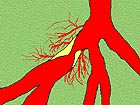
It's a remarkable process where myriad routes of tiny arterioles and capillaries expand in size and number to carry blood around an arterial blockage (and presumbably in venous blockage also!)
The collateral circulation can be from the top of a blockage (proximal) to a point beyond the blockage at the bottom (distal) thus mititgating the effect of an otherwise damaging and often deadly cessation of blood flow.
Amazingly sometimes the routing is even from one artery to another often spanning accross the heart from the left decending system to the circumflex or even RCA (right) system.

Obviously the blockage spurs the circulation and it becomes a race to see if the collateralization keeps up or a heart attack occurs!

I survived for at least a decade with collaterals around a virtually complete RCA blockage from top proximal to distal right artery (same one.) I only noticed the deficiency of blood flow during peak stress....maybe 5-10 minutes a day max!

Now, HOW do we make the collateralization progress faster than the blocking? Neither drug companies nor cardiologists really seem to care about the topic (quite naturally- we live in a capitalist society.)
But WE MUST care! We MUST find a way to enhance this process.

Let me throw a couple of my thoughts out ("Partially baked ideas", if you will: an old Mensa term for decent thoughts not fleshed out...NEVER to be confused with HALF baked ideas )

I'm an engineer and I know that hydraulics demonstrates that a way to push a new channel through is higher pressure. Is perhaps high blood pressure a way that evolution has blessed mankind in its need for coronary and cerebral collaterals...not likely that the everpresent hypertension developed from cave man days solely to enrich doctors and drug manufacturers...or to give us red faces when we get angry!

This line of thinking also goes to the subject of hard cardiac workouts to get BP up so high that it can safely force through some new arteries when needed (without blowing any out )...I'm thinking Ubernier's peak exercising (and mine lately as well )

It has always struck me a wrong-thinking to use drugs that weaken the heart's pumping ability and strength (beta and calcium channel blockers) in an effort to develop cardiac health. Lessening of pain frequency may be admirable but what if it's at the cost of slowing down auto-revascularization.
Perhaps all the studies that show that people with high blood pressure are at higher risk of heart disease have it asp backwards. Maybe the growing blockages are putting the body into a state where it it most able to revascularize with higher hydraulic pressure to force new channels! If this is correct then perhaps ALL methods of BP overcontrol are counterproductive for cardiac health, fighting the body's best efforts to survive!

Of course, it would seem any method to stop clotting (such as daily aspirin) which will prevent catastrophic total blockage, or any any anti inflammatories (also aspirin) which will prevent plaques from becoming unstable and blowing open...also causing clotting and blocking are HIGHLY desirable to buy time for the slow coollateraliztion.

I've seen some research last week on drugs that hope to stop cancer's ability to "call" vascularization from adjoining vessels, a process which allows the tumor to feed. These drugs might be effective at blocking certain receptors on blood vessels so they don't grow over to the nearby tumor, thus starving it.

Maybe we should be learning from the cancer cell and develop some of it's chemical devices to SPUR vascularization where needed...perhaps in people with 40% blockages, or some arbitrary break even point between benefit and risk.

Any thoughts?
------------------------------------------------------------------------
Last edited by zip2play : 06-17-2004 at 03:52 PM.

zip2play
View Public Profile
Find all posts by zip2play
Add zip2play to Your Buddy List
Sponsored Links


#2
06-17-2004, 04:57 PM

wordworks2001
Banned

Join Date: May 2004
Posts: 133


Re: Collateral Circulation
------------------------------------------------------------------------
There are two sources I found when I was researching noninvasive alternatives to treatment for CAD. One is from the journal Circulation. 2002;105:666 and the other is from Reviews in Cardiovascular Medicine 2002;3:5.

The Veterans Affairs Non-Q-Wave Infarctions Strategies in Hospital (VANQWISH) trial showed the noninvasive strategies not only to be more economical, but those who were treated medically had better survival 76% of the time.

This is one of the more recent studies I cited to Dr. Wayne's detractors on this board and that no one was able to effectively refute. But that is an old discussion from another flood.

Thanks for renewing the debate Zip2play. I will review what is written here faithfully and perhaps even contribute now and then. However, I am far from a candidate for MENSA, so I will probably be more of an observer.

Jeff